
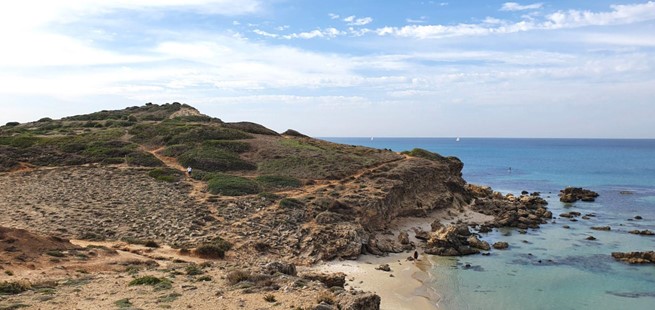
Hadera is entering a new chapter. With its beautiful coastline, expanding lifestyle scene, and growing sense of momentum, the city is increasingly emerging as one of Israel’s most intriguing coastal destinations.
Now, as a major stretch of its beachfront returns to public hands, that momentum is set to become even more visible, opening the way for a shoreline that is not only scenic, but fully integrated into the life, energy, and future of the city.
The significance of the move goes beyond the shoreline itself. It reflects a broader transformation underway in Hadera, as a city once seen mainly as a stop along the way begins to assert itself as a destination in its own right.
That evolution is being reinforced by improving access as well. A new overpass expected to open this summer will strengthen the connection between West Hadera and the mall-and-train area, making movement between Olga, the beachfront side of the city, and one of Hadera’s main commercial and transportation hubs easier than ever.
A City on the Rise
With its Mediterranean coastline, expanding neighborhoods, parks and open spaces, and increasingly lively local scene, Hadera is developing into a place that offers genuine quality of life. For families, singles, young couples, and older residents alike, it is beginning to offer the kind of well-rounded lifestyle that makes a place more than simply convenient.
At the center of that transformation is the beach. Olga Beach has long been loved by locals, and the plan now is to turn the shoreline into a more continuous, welcoming, and attractive public space, with a promenade, cafés, sports facilities, gathering areas, and upgraded amenities.
Calling it a “historic moment,” Mayor Nir Ben Haim announced that, after more than a decade of legal and planning disputes, the city had reached an agreement to return Hadera’s beachfront to the public. “We are advancing a planning process that will create an accessible, well-developed, and high-quality shoreline,” he said. “We intend to continue developing the coastline and turning it into a significant tourism destination that will attract visitors from across the country.”
For many religious and traditional families, the expansion of the separate beach at Olga Beach adds another important layer to the area’s appeal, and ongoing improvements there are part of the broader effort to make the coastline more welcoming and accessible.
That sense of transformation is already taking visible form in new luxury residential projects under construction, adjacent to the planned promenade. Yuval Schultz of ASDEN Israel explains, “VIDA Towers is more than just a beachfront project. It is attracting discerning buyers who can envision the growth and rise of Hadera and the uniqueness of its natural beauty. What the city achieved with this new agreement that will transform the beach for public use is phenomenal, and it demonstrates the city’s commitment to that future.”
VIDA reflects a broader trend in Hadera, where development is increasingly aimed at creating neighborhoods with real day-to-day appeal.
Beyond the Shore
But Hadera’s growing appeal does not begin and end with the water. Eco Park, with its lake, walking paths, lawns, playgrounds, and sports facilities, has become a major draw for families and outdoor enthusiasts. Hadera River Park offers another inviting setting for strolling, relaxing, and enjoying green space near the water.
Another part of Hadera’s growing appeal is Mul HaHof Village, a major shopping and leisure destination that adds a different kind of energy to the city. Designed with families in mind, it brings together shopping, dining, and entertainment in one open-air setting. With a wide range of brands, kosher food options, and family attractions, it gives residents and visitors yet another reason to see Hadera as more than just a beach city.
That same area is also taking shape as a business destination. Idan Turgeman, VP of Business Development and CEO of Mul HaHof Village, which recently began work on its second tower at the complex, said, “The region is experiencing significant economic momentum, with thousands of new jobs transforming the employment landscape throughout the Hadera area and its surroundings.”
Above Mul HaHof Village, the UniTowers office complex is positioning itself as part of what it calls “the business valley of Israel” on the coastal corridor between Haifa and Tel Aviv. Its own branding—”Valley for Business. Village for Pleasure”—captures the increasingly mixed-use feel of this part of Hadera, where work, leisure, retail, and accessibility are all beginning to converge.
Dining Destination
The local culinary scene is evolving as well. A growing selection of kosher cafés and restaurants is helping give the city more energy and more texture, creating the kind of atmosphere that invites people not just to pass through, but to stay out a little longer.
For many Anglo families, Hadera is becoming an increasingly attractive option: a coastal city with room to grow, a more relaxed pace than Israel’s larger urban centers, and a quality of life shaped by beaches, parks, kosher dining, and improving access.
The return of the beachfront is part of that broader shift. It signals a city that is becoming more connected, more inviting, and more confident in its direction. The renewed shoreline, in that sense, is both a public asset and a marker of where Hadera is headed.